

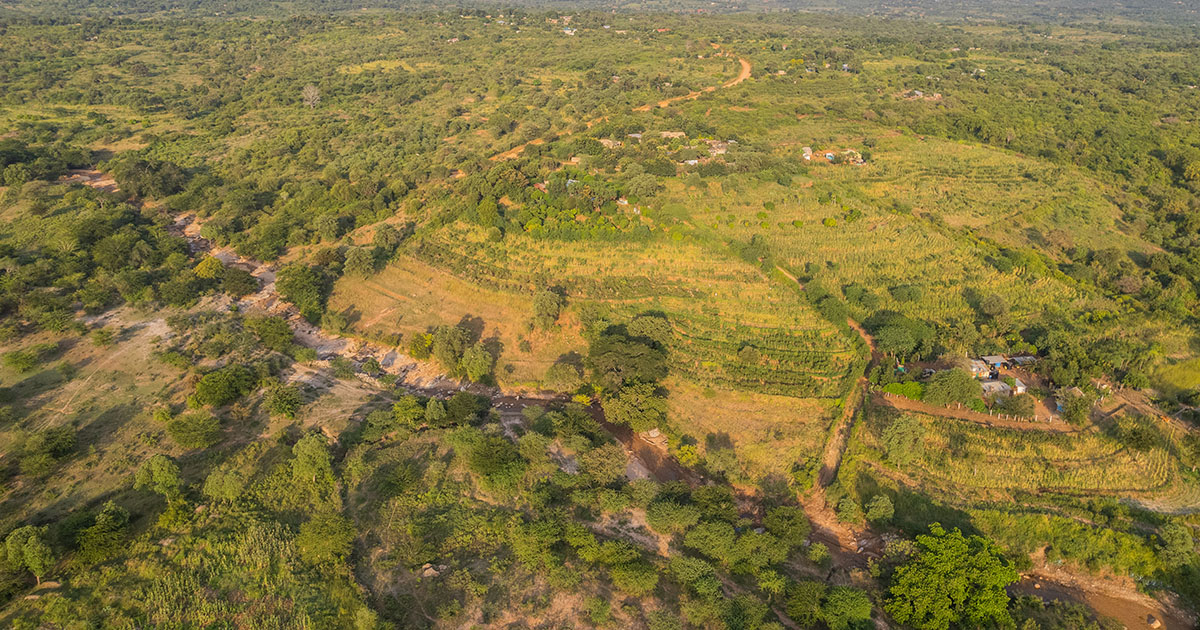




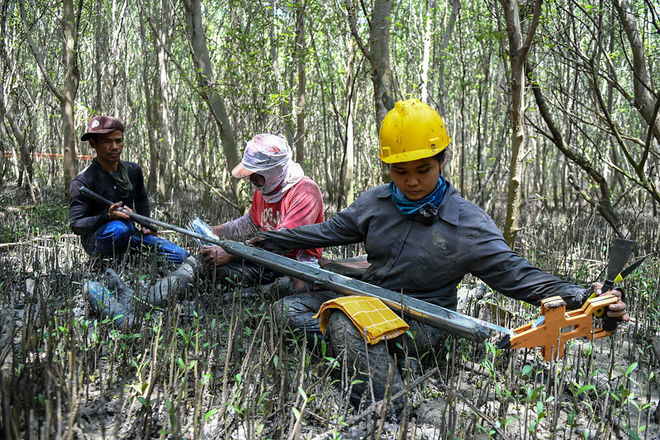
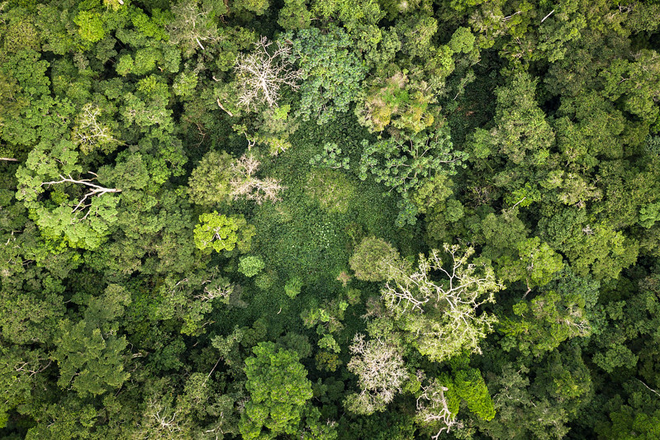



Disturbed African tropical forests and woodlands have the potential to contribute to climate change mitigation. Therefore, there is a need to understand how carbon stocks of disturbed and recovering tropical forests are determined by environmental conditions and human use. In this case study, we explore how gradients in environmental conditions and human use determine aboveground biomass (AGB) in 1958 national forest inventory (NFI) plots located in forests and woodlands in mainland Tanzania. Plots were divided into recovering forests (areas recovering from deforestation for <25years) and established forests (areas consistently defined as forests for ≥25 years). This division, as well as the detection of year of forest establishment, was obtained through the use of dense satellite time series of forest cover probability. In decreasing order of importance, AGB in recovering forests unexpectedly decreased with water availability, increased with surrounding tree cover and time since establishment, and decreased with elevation, distance to roads, and soil phosphorus content. AGB in established forests unexpectedly decreased with water availability, increased with surrounding tree cover, and soil nitrogen content, and decreased with elevation. AGB in recovering forests increased by 0.4 Mg ha−1yr−1 during the first 20 years following establishment. Our results can serve as the basis of carbon sink estimates in African recovering tropical forests and woodlands, and aid in forest landscape restoration planning.
This work is licensed under CC-BY 4.0

Download:

This work is licensed under CC-BY 4.0
DOI:
https://doi.org/10.1088/1748-9326/abe960Score Altmetric:
Dimensions Nombre de citations:
Exporter la citation:
RIS (.ris)
TI  - Variation in aboveground biomass in forests and woodlands in Tanzania along gradients in environmental conditions and human use
AU  - Suarez, D.R.
AU  - Rozendaal, D.M.
AU  - De Sy, V.
AU  - Gibbs, D.A.
AU  - Harris, N.L.
AU  - Sexton, J.O.
AU  - Feng, M.
AU  - Channan, S.
AU  - Zahabu, E.
AU  - Silayo, D.S.
AU  - Pekkarinen, A.
AU  - Martius, C.
AU  - Herold, M.
AB  - Disturbed African tropical forests and woodlands have the potential to contribute to climate change mitigation. Therefore, there is a need to understand how carbon stocks of disturbed and recovering tropical forests are determined by environmental conditions and human use. In this case study, we explore how gradients in environmental conditions and human use determine aboveground biomass (AGB) in 1958 national forest inventory (NFI) plots located in forests and woodlands in mainland Tanzania. Plots were divided into recovering forests (areas recovering from deforestation for
PY  - 2021
UR  - https://www.cifor-icraf.org/knowledge/publication/7981/
DO  - https://doi.org/10.1088/1748-9326/abe960
KW  - carbon sinks, climate change, disturbed forests, ecological restoration, mitigation, tropical forests, woodlands
ER  -
Endnote (.ciw)
%T Variation in aboveground biomass in forests and woodlands in Tanzania along gradients in environmental conditions and human use
%A Suarez, D.R.
%A Rozendaal, D.M.
%A De Sy, V.
%A Gibbs, D.A.
%A Harris, N.L.
%A Sexton, J.O.
%A Feng, M.
%A Channan, S.
%A Zahabu, E.
%A Silayo, D.S.
%A Pekkarinen, A.
%A Martius, C.
%A Herold, M.
%D 2021
%U https://www.cifor-icraf.org/knowledge/publication/7981/
%R https://doi.org/10.1088/1748-9326/abe960
%X Disturbed African tropical forests and woodlands have the potential to contribute to climate change mitigation. Therefore, there is a need to understand how carbon stocks of disturbed and recovering tropical forests are determined by environmental conditions and human use. In this case study, we explore how gradients in environmental conditions and human use determine aboveground biomass (AGB) in 1958 national forest inventory (NFI) plots located in forests and woodlands in mainland Tanzania. Plots were divided into recovering forests (areas recovering from deforestation for
%K carbon sinks
%K climate change
%K disturbed forests
%K ecological restoration
%K mitigation
%K tropical forests
%K woodlands
Année de publication
2021
ISSN
1748-9326
Auteurs
Suarez, D.R.; Rozendaal, D.M.; De Sy, V.; Gibbs, D.A.; Harris, N.L.; Sexton, J.O.; Feng, M.; Channan, S.; Zahabu, E.; Silayo, D.S.; Pekkarinen, A.; Martius, C.; Herold, M.
Langue
English
Mots clés
carbon sinks, climate change, disturbed forests, ecological restoration, mitigation, tropical forests, woodlands
Source
Environmental Research Letters. 16(4): 44014
Géographique
Tanzania