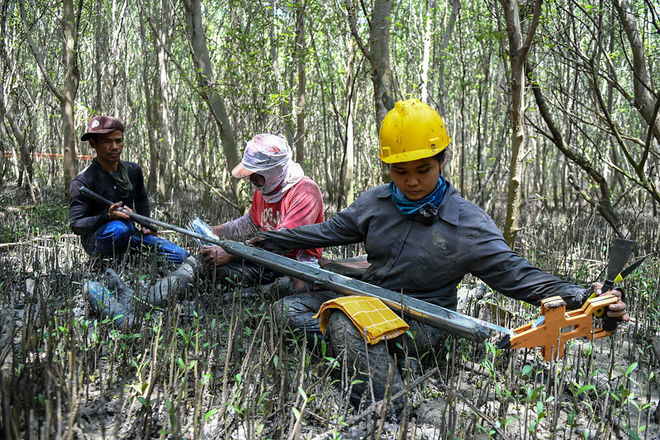
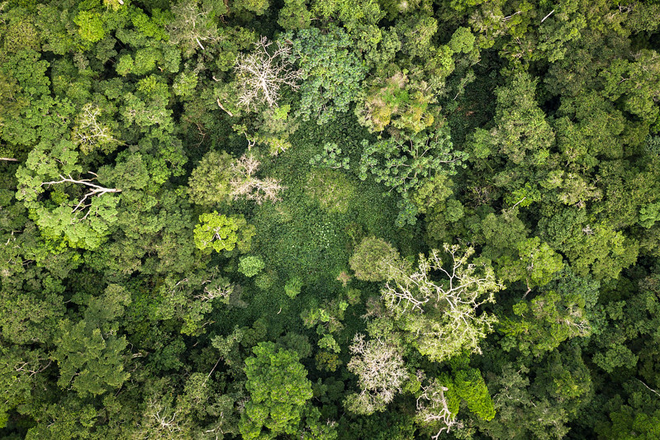



Major advances have been made over the past two decades in our understanding of the contribution forests and trees outside forests make to human well-being across the globe. Yet this knowledge has not always been incorporated into broader poverty and development policy agendas. The result is a missed opportunity to effectively and sustainably reach national and international poverty alleviation goals. Here, we address the need for greater integration of forests and trees in development policy. We distil five key findings based on the current evidence base and discuss their implications for decision-makers. We find that (1) forests and trees are critical to global efforts to end poverty but (2) their benefits to human well-being are unevenly distributed. Although the evidence indicates that (3) forests and trees can help the rural poor as they face profound global changes, it also shows that (4) poorly aligned forest and land use policies and programmes may lead to excessive costs being borne by the poor. However, we do find that (5) policy and management measures exist that can enable forests and trees to effectively address poverty goals even as there is no ‘one size fits all’ solution. Key overarching policy implications of these findings include the need to integrate forests and trees more explicitly into land-use planning and poverty reduction programs, strengthen forest property rights, self-governance and technical skills of forest-reliant communities, and carefully tailor policy measures to the context in which they are implemented.

DOI:
https://doi.org/10.1016/j.forpol.2021.102566Score Altmetric:
Dimensions Nombre de citations:
Exporter la citation:
RIS (.ris)
TI  - Forests, trees and poverty alleviation: Policy implications of current knowledge
AU  - Miller, D.C.
AU  - Mansourian, S.
AU  - Gabay, M.
AU  - Hajjar, R.
AU  - Jagger, P.
AU  - Kamoto, J.F.M.
AU  - Newton, P.
AU  - Oldekop, J.A.
AU  - Razafindratsima, O.H.
AU  - Shyamsundar, P.
AU  - Sunderland, T.C.H.
AU  - Wildburger, C.
AB  - Major advances have been made over the past two decades in our understanding of the contribution forests and trees outside forests make to human well-being across the globe. Yet this knowledge has not always been incorporated into broader poverty and development policy agendas. The result is a missed opportunity to effectively and sustainably reach national and international poverty alleviation goals. Here, we address the need for greater integration of forests and trees in development policy. We distil five key findings based on the current evidence base and discuss their implications for decision-makers. We find that (1) forests and trees are critical to global efforts to end poverty but (2) their benefits to human well-being are unevenly distributed. Although the evidence indicates that (3) forests and trees can help the rural poor as they face profound global changes, it also shows that (4) poorly aligned forest and land use policies and programmes may lead to excessive costs being borne by the poor. However, we do find that (5) policy and management measures exist that can enable forests and trees to effectively address poverty goals even as there is no ‘one size fits all’ solution. Key overarching policy implications of these findings include the need to integrate forests and trees more explicitly into land-use planning and poverty reduction programs, strengthen forest property rights, self-governance and technical skills of forest-reliant communities, and carefully tailor policy measures to the context in which they are implemented.
PY  - 2021
UR  - https://www.cifor-icraf.org/knowledge/publication/8167/
DO  - https://doi.org/10.1016/j.forpol.2021.102566
KW  - agroforestry, forest management, forest policy, land use, livelihoods, poverty, sustainable development
ER  -
Endnote (.ciw)
%T Forests, trees and poverty alleviation: Policy implications of current knowledge
%A Miller, D.C.
%A Mansourian, S.
%A Gabay, M.
%A Hajjar, R.
%A Jagger, P.
%A Kamoto, J.F.M.
%A Newton, P.
%A Oldekop, J.A.
%A Razafindratsima, O.H.
%A Shyamsundar, P.
%A Sunderland, T.C.H.
%A Wildburger, C.
%D 2021
%U https://www.cifor-icraf.org/knowledge/publication/8167/
%R https://doi.org/10.1016/j.forpol.2021.102566
%X Major advances have been made over the past two decades in our understanding of the contribution forests and trees outside forests make to human well-being across the globe. Yet this knowledge has not always been incorporated into broader poverty and development policy agendas. The result is a missed opportunity to effectively and sustainably reach national and international poverty alleviation goals. Here, we address the need for greater integration of forests and trees in development policy. We distil five key findings based on the current evidence base and discuss their implications for decision-makers. We find that (1) forests and trees are critical to global efforts to end poverty but (2) their benefits to human well-being are unevenly distributed. Although the evidence indicates that (3) forests and trees can help the rural poor as they face profound global changes, it also shows that (4) poorly aligned forest and land use policies and programmes may lead to excessive costs being borne by the poor. However, we do find that (5) policy and management measures exist that can enable forests and trees to effectively address poverty goals even as there is no ‘one size fits all’ solution. Key overarching policy implications of these findings include the need to integrate forests and trees more explicitly into land-use planning and poverty reduction programs, strengthen forest property rights, self-governance and technical skills of forest-reliant communities, and carefully tailor policy measures to the context in which they are implemented.
%K agroforestry
%K forest management
%K forest policy
%K land use
%K livelihoods
%K poverty
%K sustainable development
Année de publication
2021
ISSN
1389-9341
Auteurs
Miller, D.C.; Mansourian, S.; Gabay, M.; Hajjar, R.; Jagger, P.; Kamoto, J.F.M.; Newton, P.; Oldekop, J.A.; Razafindratsima, O.H.; Shyamsundar, P.; Sunderland, T.C.H.; Wildburger, C.
Langue
English
Mots clés
agroforestry, forest management, forest policy, land use, livelihoods, poverty, sustainable development
Source
Forest Policy and Economics. 131: 102566