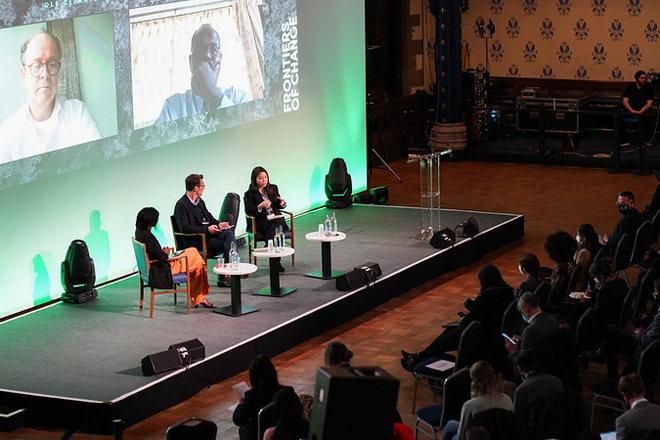

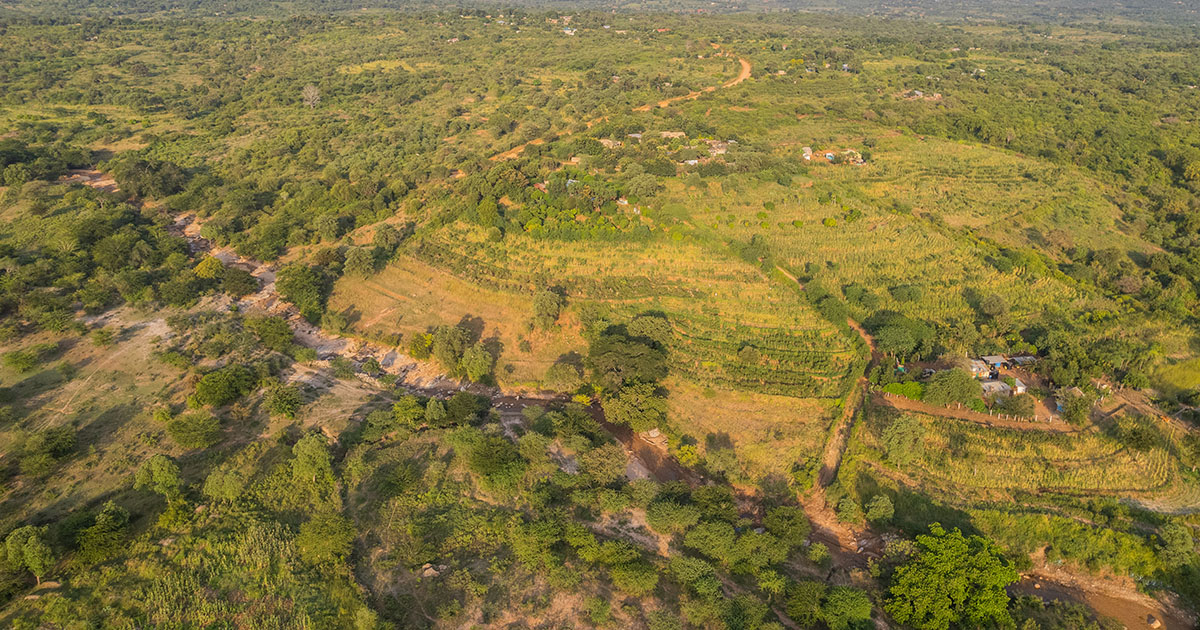






To address land degradation, climate change, and livestock feed gaps in semi-arid Malawi, the Accelerating Impacts of CGIAR Climate Research for Africa (AICCRA) project in partnership with the Center for International Forestry Research and World Agroforestry (CIFOR-ICRAF), initiated the spillover of validated climate-smart feed and forage technologies, with a focus on Gliricidia sepium agroforestry practices. Over 2-3 December 2024, a workshop was held in Dowa District, Malawi, to improve training participants’ knowledge on the selected technologies as well as enhance partnerships and collaboration to accelerate the spillover process. This workshop report outlines the rationale for the training, details how the event was planned and implemented, and provides an overview of the participants. It concludes with a summary of the key findings and proposes recommendations to guide the way forward.
This work is licensed under CC-BY 4.0
This work is licensed under CC-BY 4.0
Exporter la citation:
RIS (.ris)
TI  - Training on climate-smart forage and feed innovations - Malawi
AU  - Njoloma, J.
AU  - Nyoka, I.
AU  - Gosling, A.
AU  - Cramer, L.K.
AB  - To address land degradation, climate change, and livestock feed gaps in semi-arid Malawi, the Accelerating Impacts of CGIAR Climate Research for Africa (AICCRA) project in partnership with the Center for International Forestry Research and World Agroforestry (CIFOR-ICRAF), initiated the spillover of validated climate-smart feed and forage technologies, with a focus on Gliricidia sepium agroforestry practices. Over 2-3 December 2024, a workshop was held in Dowa District, Malawi, to improve training participants’ knowledge on the selected technologies as well as enhance partnerships and collaboration to accelerate the spillover process. This workshop report outlines the rationale for the training, details how the event was planned and implemented, and provides an overview of the participants. It concludes with a summary of the key findings and proposes recommendations to guide the way forward.
PY  - 2025
PB  - Accelerating Impacts of CGIAR Climate Research for Africa
UR  - https://www.cifor-icraf.org/knowledge/publication/36727/
KW  - adaptation, agroforestry, climate change, climate smart agriculture, land degradation
ER  -
Endnote (.ciw)
%T Training on climate-smart forage and feed innovations - Malawi
%A Njoloma, J.
%A Nyoka, I.
%A Gosling, A.
%A Cramer, L.K.
%D 2025
%I Accelerating Impacts of CGIAR Climate Research for Africa
%U https://www.cifor-icraf.org/knowledge/publication/36727/
%X To address land degradation, climate change, and livestock feed gaps in semi-arid Malawi, the Accelerating Impacts of CGIAR Climate Research for Africa (AICCRA) project in partnership with the Center for International Forestry Research and World Agroforestry (CIFOR-ICRAF), initiated the spillover of validated climate-smart feed and forage technologies, with a focus on Gliricidia sepium agroforestry practices. Over 2-3 December 2024, a workshop was held in Dowa District, Malawi, to improve training participants’ knowledge on the selected technologies as well as enhance partnerships and collaboration to accelerate the spillover process. This workshop report outlines the rationale for the training, details how the event was planned and implemented, and provides an overview of the participants. It concludes with a summary of the key findings and proposes recommendations to guide the way forward.
%K adaptation
%K agroforestry
%K climate change
%K climate smart agriculture
%K land degradation
Publisher
Accelerating Impacts of CGIAR Climate Research for Africa
Année de publication
2025
Auteurs
Njoloma, J.; Nyoka, I.; Gosling, A.; Cramer, L.K.
Langue
English
Mots clés
adaptation, agroforestry, climate change, climate smart agriculture, land degradation
Géographique
Malawi