




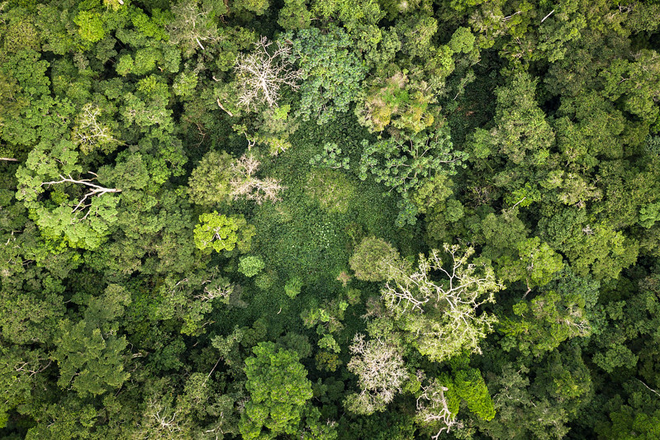



Tropical deforestation has many consequences, amongst which alteration of the hydrological cycle and loss of habitat and biodiversity are the focus of much public interest and scientific research. Here we examine the potential biodiversity and hydrological impacts of an extreme deforestation scenario – the loss of all tropical forest areas currently identified by the World Wildlife Fund as being threatened. Existing tropical forest areas are first classified according to two categories of biological distinctiveness – high and low – using indicators developed by the WWF. We apply the tropical deforestation scenario to a macro-scale hydrologic model, keeping track of the share of change in basin runoff that originates from the deforestation of areas of high versus low biological distinctiveness and where that change could impact human populations. Of particular interest are those basins where loss of the most threatened tropical forest areas would give rise to significant biodiversity loss and to potentially large hydrological impacts. In such cases it is conceivable that biodiversity conservation could “free-ride” on the concerns of resident populations to maintain the forests for the purpose of minimizing hydrological change. Where such an outcome seems likely, biodiversity conservation efforts might be better targeted elsewhere, perhaps to basins where the loss of forest areas with high biological distinctiveness would have less population impacts, hence requiring an alliance between biological and hydrological interests to gain sufficient social and financial support for conservation.

DOI:
https://doi.org/10.1007/s11269-006-9050-2Score Altmetric:
Dimensions Nombre de citations:
Exporter la citation:
RIS (.ris)
TI  - Policy implications of a pan-tropic assessment of the simultaneous hydrological and biodiversity impacts of deforestation
AU  - Douglas, E.M.
AU  - Wood, S.A.
AU  - Sebastian, K.
AU  - Vörösmarty, C.J.
AU  - Chomitz, K.M.
AU  - Tomich, T.P.
AB  - Tropical deforestation has many consequences, amongst which alteration of the hydrological cycle and loss of habitat and biodiversity are the focus of much public interest and scientific research. Here we examine the potential biodiversity and hydrological impacts of an extreme deforestation scenario – the loss of all tropical forest areas currently identified by the World Wildlife Fund as being threatened. Existing tropical forest areas are first classified according to two categories of biological distinctiveness – high and low – using indicators developed by the WWF. We apply the tropical deforestation scenario to a macro-scale hydrologic model, keeping track of the share of change in basin runoff that originates from the deforestation of areas of high versus low biological distinctiveness and where that change could impact human populations. Of particular interest are those basins where loss of the most threatened tropical forest areas would give rise to significant biodiversity loss and to potentially large hydrological impacts. In such cases it is conceivable that biodiversity conservation could “free-ride” on the concerns of resident populations to maintain the forests for the purpose of minimizing hydrological change. Where such an outcome seems likely, biodiversity conservation efforts might be better targeted elsewhere, perhaps to basins where the loss of forest areas with high biological distinctiveness would have less population impacts, hence requiring an alliance between biological and hydrological interests to gain sufficient social and financial support for conservation.
PY  - 2007
UR  - https://www.cifor-icraf.org/knowledge/publication/33069/
DO  - https://doi.org/10.1007/s11269-006-9050-2
KW  - biodiversity, conservation (storage), deforestation, human behaviour, human vulnerability, hydrology
ER  -
Endnote (.ciw)
%T Policy implications of a pan-tropic assessment of the simultaneous hydrological and biodiversity impacts of deforestation
%A Douglas, E.M.
%A Wood, S.A.
%A Sebastian, K.
%A Vörösmarty, C.J.
%A Chomitz, K.M.
%A Tomich, T.P.
%D 2007
%U https://www.cifor-icraf.org/knowledge/publication/33069/
%R https://doi.org/10.1007/s11269-006-9050-2
%X Tropical deforestation has many consequences, amongst which alteration of the hydrological cycle and loss of habitat and biodiversity are the focus of much public interest and scientific research. Here we examine the potential biodiversity and hydrological impacts of an extreme deforestation scenario – the loss of all tropical forest areas currently identified by the World Wildlife Fund as being threatened. Existing tropical forest areas are first classified according to two categories of biological distinctiveness – high and low – using indicators developed by the WWF. We apply the tropical deforestation scenario to a macro-scale hydrologic model, keeping track of the share of change in basin runoff that originates from the deforestation of areas of high versus low biological distinctiveness and where that change could impact human populations. Of particular interest are those basins where loss of the most threatened tropical forest areas would give rise to significant biodiversity loss and to potentially large hydrological impacts. In such cases it is conceivable that biodiversity conservation could “free-ride” on the concerns of resident populations to maintain the forests for the purpose of minimizing hydrological change. Where such an outcome seems likely, biodiversity conservation efforts might be better targeted elsewhere, perhaps to basins where the loss of forest areas with high biological distinctiveness would have less population impacts, hence requiring an alliance between biological and hydrological interests to gain sufficient social and financial support for conservation.
%K biodiversity
%K conservation (storage)
%K deforestation
%K human behaviour
%K human vulnerability
%K hydrology
Année de publication
2007
ISSN
0920-4741
Auteurs
Douglas, E.M.; Wood, S.A.; Sebastian, K.; Vörösmarty, C.J.; Chomitz, K.M.; Tomich, T.P.
Langue
English
Mots clés
biodiversity, conservation (storage), deforestation, human behaviour, human vulnerability, hydrology
Source
Water Resources Management. 21(1): 211-232