








Key messages
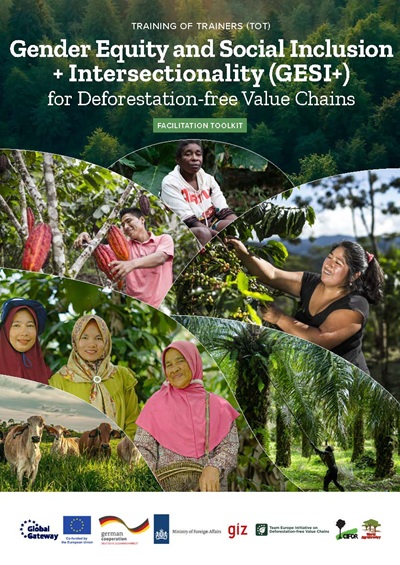
- Women smallholders and Indigenous Peoples and Local Communities (IPLCs) play a vital role in cocoa production, yet face exclusion due to a lack of land tenure security, limited access to resources, credit, and training, and underrepresentation in decision-making. Addressing these barriers to intersectional groups is essential for a fair and just transition to sustainable and deforestation-free agriculture.
- The dominance of intermediaries (aggregators and traders) in Central Sulawesi hinders traceability to the farm-level in cocoa value chains, especially for resource-poor farmers with low bargaining power and smallholders with informal tenure.
- Smallholder farmers face seven key risks, including limited resources, uncertain land ownership, supply chain vulnerabilities, certification challenges, climate change impacts, legality issues, and weak negotiating power, which can be mitigated through capacity building around social agroforestry, land certification, climate-smart farming, and collective action and data management, leveraging legal frameworks and digital platforms to access global markets.
- Global market regulation for sustainable agriculture can have both positive and negative impacts on vulnerable smallholders, and their implementation requires careful consideration to ensure inclusion, benefits, and protection of rights, ultimately contributing to more sustainable and equitable value chains.
This work is licensed under CC-BY 4.0
Exportar la cita:
RIS (.ris)
TI  - Gender Equity, Social Inclusion and Intersectionality (GESI+) in Sustainable and Deforestation-free Agriculture. Lessons from Palu, Central Sulawesi, Indonesia
AU  - Liswanti, N.
AU  - Gallagher , E.J.
AU  - Ramadhan, H.
AB  - Key messages

Women smallholders and Indigenous Peoples and Local Communities (IPLCs) play a vital role in cocoa production, yet face exclusion due to a lack of land tenure security, limited access to resources, credit, and training, and underrepresentation in decision-making. Addressing these barriers to intersectional groups is essential for a fair and just transition to sustainable and deforestation-free agriculture.
The dominance of intermediaries (aggregators and traders) in Central Sulawesi hinders traceability to the farm-level in cocoa value chains, especially for resource-poor farmers with low bargaining power and smallholders with informal tenure.
Smallholder farmers face seven key risks, including limited resources, uncertain land ownership, supply chain vulnerabilities, certification challenges, climate change impacts, legality issues, and weak negotiating power, which can be mitigated through capacity building around social agroforestry, land certification, climate-smart farming, and collective action and data management, leveraging legal frameworks and digital platforms to access global markets.
Global market regulation for sustainable agriculture can have both positive and negative impacts on vulnerable smallholders, and their implementation requires careful consideration to ensure inclusion, benefits, and protection of rights, ultimately contributing to more sustainable and equitable value chains.

PY  - 2026
PB  - CIFOR-ICRAF and GIZ
PP  - Bogor, Indonesia; Nairobi, Kenya; Bonn, Germany
UR  - https://www.cifor-icraf.org/knowledge/publication/46418/
KW  - agroforestry, certification, climate-smart agriculture, cocoa (plant), indigenous peoples, land tenure, local communities, smallholders
ER  -
Endnote (.ciw)
%T Gender Equity, Social Inclusion and Intersectionality (GESI+) in Sustainable and Deforestation-free Agriculture. Lessons from Palu, Central Sulawesi, Indonesia
%A Liswanti, N.
%A Gallagher , E.J.
%A Ramadhan, H.
%D 2026
%I CIFOR-ICRAF and GIZ
%C Bogor, Indonesia; Nairobi, Kenya; Bonn, Germany
%U https://www.cifor-icraf.org/knowledge/publication/46418/
%X Key messages

Women smallholders and Indigenous Peoples and Local Communities (IPLCs) play a vital role in cocoa production, yet face exclusion due to a lack of land tenure security, limited access to resources, credit, and training, and underrepresentation in decision-making. Addressing these barriers to intersectional groups is essential for a fair and just transition to sustainable and deforestation-free agriculture.
The dominance of intermediaries (aggregators and traders) in Central Sulawesi hinders traceability to the farm-level in cocoa value chains, especially for resource-poor farmers with low bargaining power and smallholders with informal tenure.
Smallholder farmers face seven key risks, including limited resources, uncertain land ownership, supply chain vulnerabilities, certification challenges, climate change impacts, legality issues, and weak negotiating power, which can be mitigated through capacity building around social agroforestry, land certification, climate-smart farming, and collective action and data management, leveraging legal frameworks and digital platforms to access global markets.
Global market regulation for sustainable agriculture can have both positive and negative impacts on vulnerable smallholders, and their implementation requires careful consideration to ensure inclusion, benefits, and protection of rights, ultimately contributing to more sustainable and equitable value chains.

%K agroforestry
%K certification
%K climate-smart agriculture
%K cocoa (plant)
%K indigenous peoples
%K land tenure
%K local communities
%K smallholders
Publisher
CIFOR-ICRAF and GIZ: Bogor, Indonesia; Nairobi, Kenya; Bonn, Germany
Año de publicación
2026
Autores
Liswanti, N.; Gallagher , E.J.; Ramadhan, H.
Idioma
English
Palabras clave
agroforestry, certification, climate-smart agriculture, cocoa (plant), indigenous peoples, land tenure, local communities, smallholders
Geográfico
Indonesia